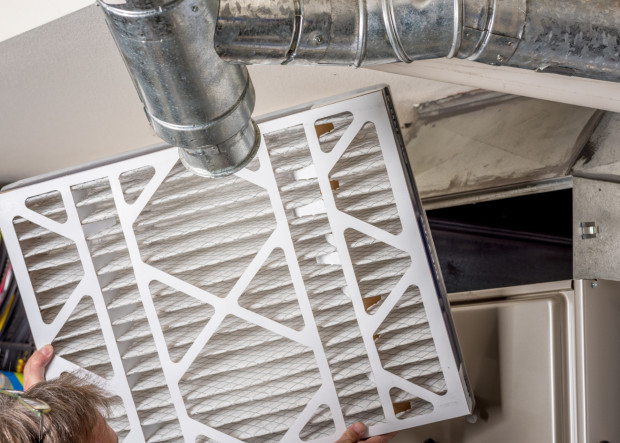
What does MERV mean on an air filter?
MERV stands for Minimum Efficiency Reporting Value. It's a scale from 1 to 20 that tells you how well a filter catches particles of different sizes. The higher the number, the smaller the particles it traps. A MERV 6 catches dust and lint. A MERV 11 adds pet dander and mold spores. A MERV 13 grabs bacteria and smoke particles. But the scale doesn't tell you how hard your blower has to work to push air through that tighter mesh. That's the part the package leaves out.
How high is too high for a residential system?
Most residential split systems in South Florida are built for a pressure drop of 0.1 to 0.2 inches of water column across a clean filter. A standard MERV 8 pleated filter sits around 0.12 inches. A MERV 13 can hit 0.25 to 0.35 inches clean — and it climbs fast as it loads. That extra resistance is like putting a thumb over a garden hose: the pump (your blower) works harder, moves less air, and runs longer to satisfy the thermostat. If your system wasn't sized or ducted for that resistance, you lose capacity and efficiency.
What are the signs your filter is choking your airflow?
You'll feel it before you see it. Air from the supply vents feels weak, like a fan on low instead of medium. The system runs 20-minute cycles where it used to run 12. The indoor humidity creeps above 60 percent because the coil doesn't get enough warm air across it to condense moisture. You might hear the blower motor strain — a deeper, labored hum. And the electric bill climbs even though the weather hasn't changed. Pull the filter and hold it to a bright light: if you can't see light through the pleats, it's loaded, but even a clean high-MERV filter can restrict if the system wasn't made for it.
Why does a too-tight filter hurt your system?
Think of your blower like a person breathing through a straw. A wide straw (MERV 8) lets them jog comfortably. A coffee-stirrer straw (MERV 13) forces them to gasp. The motor draws more amps, runs hotter, and wears out faster. The evaporator coil gets colder than it should because less warm air crosses it — that can lead to freeze-ups, especially on humid August nights when the suction pressure drops. The compressor, the most expensive part, pays the price. Low airflow also means the heat exchanger in a gas furnace can overheat and crack, though that's more a northern concern. Here, it's the compressor and the motor that take the hit.
Here's another way to picture it: your ductwork is a highway. The filter is a toll booth. A MERV 8 booth has four open lanes. A MERV 13 booth has one. Same traffic (air), fewer lanes — backup happens. The pressure builds upstream (return side) and drops downstream (supply side). Your blower is the traffic cop trying to keep cars moving. It burns out directing the jam.
How to pick the right MERV for your home
Start with what the manufacturer specifies. Look at the air handler or furnace data plate — it often lists a maximum filter pressure drop or a recommended MERV range. No plate? Check the install manual or call the brand's support line with the model number. If you have allergies or asthma, MERV 11 is usually the sweet spot: it catches most triggers without choking standard equipment. MERV 13 and above belong in systems with variable-speed blowers, larger return ducts, or dedicated filter cabinets designed for the resistance. When in doubt, step down one level. A MERV 8 changed every 30 days beats a MERV 13 changed every 90 days if the latter starves your system.
Can you just switch to a lower MERV filter?
Yes, and it's the fastest fix. Turn the system off at the thermostat, pull the high-MERV filter, note the size (printed on the cardboard frame — something like 20x25x1 or 16x20x1), and buy a MERV 8 or 10 pleated filter in the same dimensions. Slide it in with the arrow on the frame pointing toward the blower (that's the airflow direction). Turn the system back on. Wait 15 minutes. Feel the vents. You should notice stronger, cooler air. If the humidity drops and cycles shorten, you've solved it. Mark the install date on the frame with a Sharpie. In North Miami's summer, check it at 30 days — salt air and pollen load filters faster than the box says.
The video below, "Why the $30 Air Filter Is Destroying Your HVAC System (The MERV Rating Lie)" from the channel Vent Exposed, makes the same case this article does — with the engineering receipts. It breaks down why a MERV 13 filter creates far more static pressure than most residential blowers are built for, what that restriction does to your evaporator coil and compressor, and why most HVAC technicians run a cheap MERV 8 in their own homes and change it often. If the box in the filter aisle has you second-guessing, this is the myth-busting walkthrough that settles it.
Vent Exposed walks through the numbers behind the MERV marketing: the static-pressure penalty of a MERV 13 versus a MERV 8, what happens to a standard blower trying to push through that resistance, and the failure chain it sets off — frozen evaporator coils, compressor strain, and premature system death. The video also covers what technicians actually buy for their own houses and the alternatives (like a standalone HEPA unit) if you want cleaner air without choking your system. It's a straight-talking breakdown that matches everything above: the filter aisle sells fear, but your blower has a pressure budget, and exceeding it costs you.
When to call us
If you've dropped to a MERV 8 and the vents still feel weak, if the coil keeps freezing up, if the blower sounds labored, or if you're not sure your ductwork can handle the filter you're running — call North Miami Air Care at (786) 892-8383. We serve North Miami and nearby, Monday through Saturday, 8 AM to 8 PM. We'll check your static pressure, confirm the right filter for your equipment, and tell you straight whether the problem is the filter or something deeper. If a $6 filter swap fixes it, we'll say so.