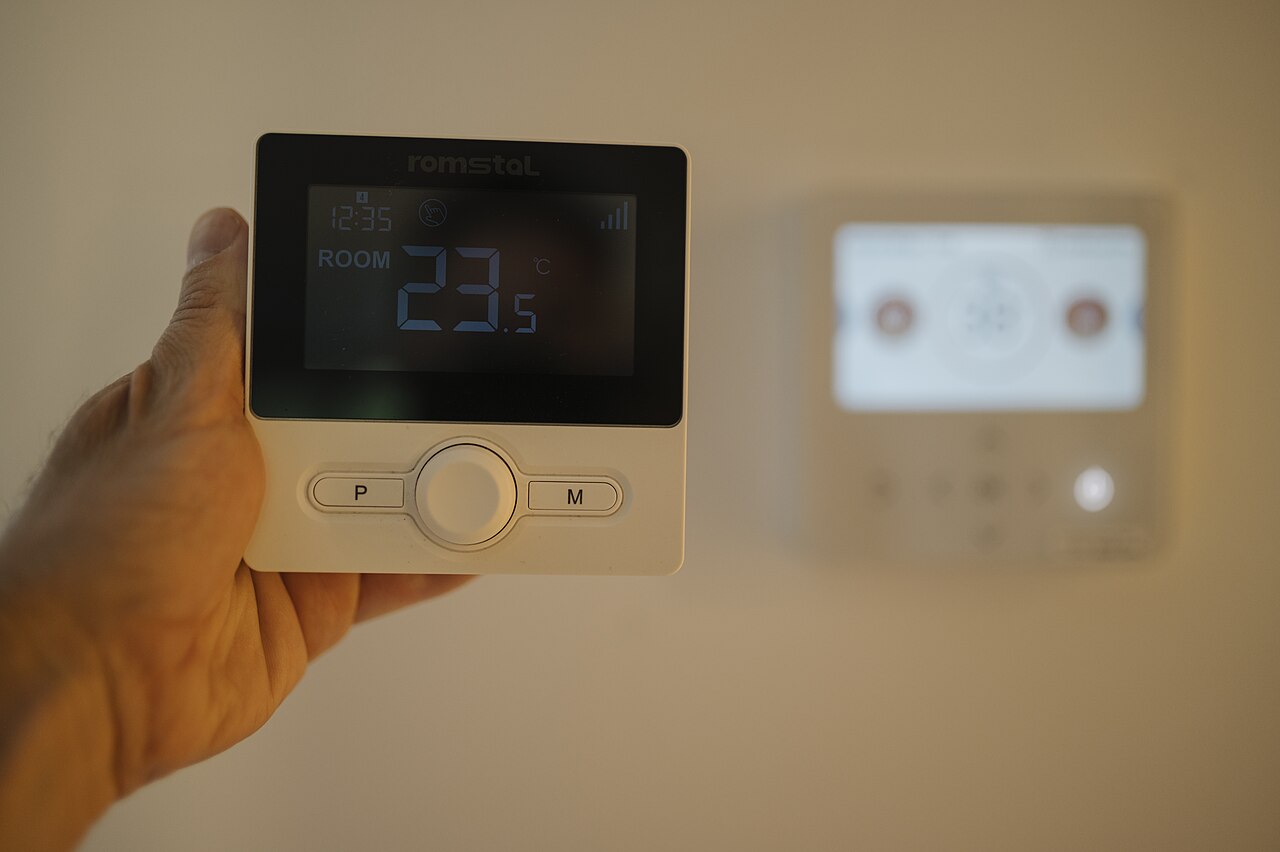
It's an October afternoon in North Miami, 89 degrees outside, and your AC has been running nonstop since lunch. The living room feels fine, but the back bedroom is a sauna — same house, same system, five degrees warmer. If you've got one room that refuses to cool down while the rest of the house is comfortable, you've got a hot spot. Here's how to find it, figure out why it's happening, and fix what you can yourself.
How to find the warmest room
Start with the simplest tool: any thermometer. Set your thermostat to its normal cooling temperature and let the system run for at least 30 minutes. Then walk room to room and write down the temperature in each one. The hot spot is the room that reads several degrees warmer than the rooms around it — a 3 to 5 degree gap is the classic sign. While you're walking, put your hand in front of each vent in the warm room. Weak airflow at the vent but strong airflow elsewhere points to a duct problem feeding that room. No airflow at all means the vent may be closed, blocked by furniture, or disconnected behind the wall or ceiling.Why one room stays warm
Think of your ductwork like the branches of a tree. The air handler is the trunk, and each room gets a branch. The rooms at the far ends of the longest branches get the weakest airflow — that's why the back bedroom or the room over the garage is usually the hot spot. The most common causes, in the order a tech would check them: 1. **Blocked or closed vent.** Furniture, curtains, or a rug over the register. Sometimes a previous owner closed a vent and nobody reopened it. 2. **Leaky or crushed duct.** Flex duct in a hot attic can sag, kink, or pull loose at the connections. Every leak dumps cold air into the attic instead of the room. 3. **Sun load.** A west-facing room with big windows takes a beating from afternoon sun. In South Florida that solar heat can overwhelm the airflow the room was designed for. 4. **Dirty filter or coil.** A clogged filter chokes the whole system, and the farthest rooms suffer first. Same story with a dirty evaporator coil. 5. **System-level problems.** Low refrigerant, a failing blower motor, or an undersized system shows up as hot spots before it shows up anywhere else.DIY video guide
What the video shows and key points
The video above is "Don't Get Ripped Off! How to Diagnose a Warm AC." It walks through the homeowner-level checks to run when your AC isn't cooling right: confirming the thermostat is actually calling for cooling, checking airflow at the vents, looking at the filter, and the simple observations that tell you whether you're dealing with a quick fix or something that needs a technician's gauges. Watch it with your own hot spot in mind — the diagnostic order in the video is the same order you'd use room by room.